

Commentary
A leak of Russian gas price data helps establish that China is paying Russia far less than Central Asian countries and Gazprom’s former European customers.
Sergey Vakulenko
{
  "authors": [
    "Paul Haenle",
    "Tong Zhao",
    "Chung Min Lee"
  ],
  "type": "questionAnswer",
  "centerAffiliationAll": "dc",
  "centers": [
    "Carnegie Endowment for International Peace",
    "Carnegie China"
  ],
  "collections": [
    "China’s Foreign Relations",
    "Carnegie China Commentaries"
  ],
  "englishNewsletterAll": "asia",
  "nonEnglishNewsletterAll": "",
  "primaryCenter": "Carnegie China",
  "programAffiliation": "AP",
  "programs": [
    "Asia"
  ],
  "projects": [],
  "regions": [
    "North America",
    "United States",
    "East Asia",
    "China",
    "North Korea",
    "South Korea",
    "Japan"
  ],
  "topics": [
    "Arms Control",
    "Foreign Policy",
    "Nuclear Policy",
    "Security"
  ]
}
Source: Getty
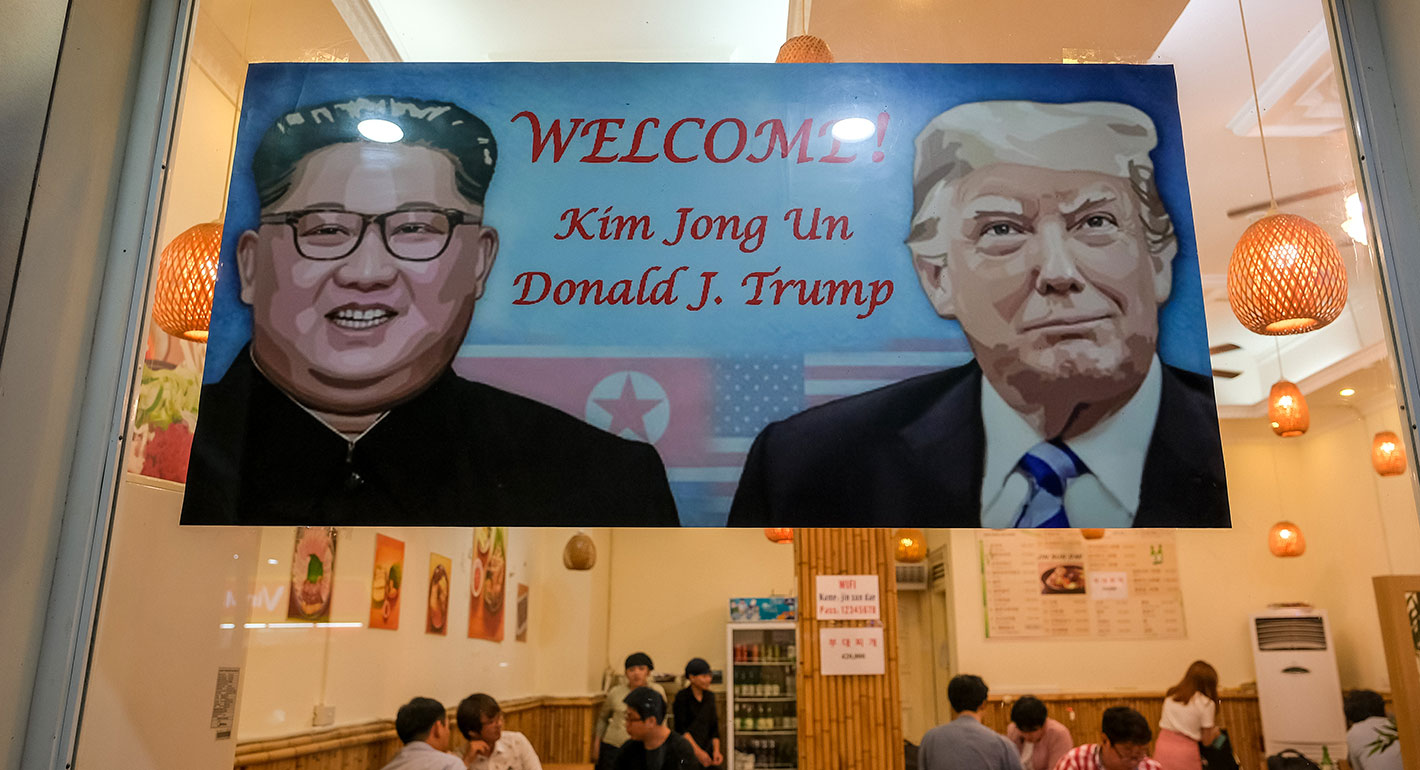
U.S. President Donald Trump meets North Korean leader Kim Jong-un in Hanoi this week. What do Washington, Pyongyang, Beijing, and others hope to see accomplished at the summit? Three Carnegie experts weigh in.
Paul Haenle: Concrete is the key word here. Trump needs to get something tangible out of the Hanoi summit. Another set of vague, noncommittal outcomes like those made at the first summit in Singapore in June 2018 will not suffice.
Statements by U.S. Special Representative for North Korea Stephen Biegun indicate that “concrete deliverables” would include a detailed roadmap for negotiations and a full accounting of North Korea’s nuclear inventory and capabilities. These deliverables must be matched with independently verifiable commitments by Pyongyang. Securing these goals would signify progress, but such progress would come more than six months late and should have been the objective of the Singapore summit.
In remarks he gave at Stanford University in January 2019, Biegun admitted that Washington and Pyongyang still do not have a “specific and agreed definition” of denuclearization. Kim’s father and grandfather used unclear definitions to prolong, stall, and undercut past rounds of negotiations. Kim will likely do the same. Reaching an understanding of what denuclearization actually entails would clarify whether the two countries want the same long-term outcome.
Haenle: Trump tweeted after the Singapore summit that “There is no longer a Nuclear Threat from North Korea.” That statement is patently false. North Korea maintains its nuclear weapons, delivery systems, and a nuclear deterrent. While there have been no nuclear or missile tests in more than a year, reports indicate that Pyongyang continues to increase its nuclear inventory. Trump cannot enter Hanoi believing his own tweet, or he will risk again falling into the trap of giving up too much for too little.
The United States still has leverage. Kim needs positive relations with Washington to ensure that he does not become overly reliant on or beholden to Beijing. He also needs an easing of sanctions to hasten economic development.
Trump should be wary of making any concessions that might hurt the interests of Seoul and Tokyo without first consulting them. His extemporaneous remarks in Singapore, where he suspended joint military exercises with South Korea and questioned the presence of U.S. troops there, undermined U.S. credibility. Kim has shown an ability to skillfully exploit cracks between Washington, its allies, and other partners like Beijing for his own benefit. If Trump can restrain himself from making commitments that have not already been communicated, he can avoid falling into this trap again.
Tong Zhao: China has mixed feelings as it watches the U.S.–North Korea summit unfold. Beijing fears that Pyongyang might become too close to the United States, which would undermine China’s special influence over North Korea and the peninsula as a whole. This concern has lessened of late, as Kim went out of his way to pay respect to China during his latest trip to Beijing, creating the impression that he is fully consulting Chinese leaders on his next steps.
Another Chinese fear is that Trump might accept a deal that addresses U.S. security concerns but not those of other countries. For instance, if Trump focuses primarily on the removal of North Korea’s intercontinental ballistic missile capabilities but leaves all Pyongyang’s shorter-range missiles intact, the regional security environment would not necessarily improve. Due to Trump’s America First policy and a growing climate of U.S.-China competition, Beijing does not trust that the U.S. president will keep Chinese interests in mind as he attends the important meeting in Hanoi.
On the other hand, China also worries about the risks of an unsuccessful summit. Heading into the meeting, both Kim and Trump seem to be digging in their heels on the key issues. North Korea appears unwilling to take any measures that would undermine its existing nuclear deterrent capabilities, and the United States appears to be insisting that all existing sanctions remain in place unless Pyongyang shows interest in rolling back—not just stopping the development of—its nuclear and missile programs. Without real progress on these key issues, China fears a historic opportunity to denuclearize North Korea and improve regional security could be missed.
Beijing believes that normalizing relations between Washington and Pyongyang and helping North Korea develop its economy are important for making North Korea less dependent on nuclear weapons. But if no substantive results come out of the second summit, it will be harder for China to push for deeper engagement with North Korea; the dual-track approach that Beijing supports could also risk becoming a dead end.
Chung Min Lee: For South Korea and President Moon Jae-in’s administration, the second Trump-Kim summit is a make-or-break event.
Moon is betting all his political capital on sustained engagement with Kim out of the belief that he can engineer an end to the miniature Cold War that has remained between the two Koreas since the end of the Korean War in 1953. Moon wants to distract South Korean citizens from the country’s sluggish economy and growing unemployment by taking credit for inter-Korean peace and boosting his party’s chances in the next parliamentary election.
Regardless of the deals that will be made during the summit, however, Kim has already won the propaganda war. Despite the fact that he runs a totalitarian state, both Moon and Trump have opted to paint Kim as a reformer-in-waiting who has repeatedly promised to give up his nuclear arsenal.
What outsiders do not really see is the alignment of strategic interests between Beijing, Pyongyang, and Seoul, including on the prospect of de facto recognition of North Korea as a nuclear power. For decades, North Korea and China have called for the withdrawal of U.S. forces from South Korea and East Asia as a whole. While U.S. forces remain deployed in South Korea and Japan, their future in Asia is hardly guaranteed, especially by a U.S. president who sees little value in maintaining this presence. What’s more, Trump is helping strengthen the China–North Korea–South Korea triangle. The U.S. president sorely needs a major foreign policy victory in the absence of any real diplomatic achievements more than two years into his term.
Trump places a premium on his own negotiating prowess. But his shortsightedness will play a role in weakening the U.S.–South Korea military alliance and the longer-term deterioration of the U.S.-Japan alliance.
Admittedly, by coming to the table, Trump has already achieved what no other U.S. president had before him. But by conferring legitimacy on Kim and downplaying the importance of denuclearization, he has declared a pyrrhic victory and stands to severely undermine the rationale for a robust U.S.–South Korea alliance. These factors will be the real consequences of the forthcoming Trump-Kim summit.

Former Maurice R. Greenberg Director’s Chair, Carnegie China
Paul Haenle held the Maurice R. Greenberg Director’s Chair at the Carnegie Endowment for International Peace and is a visiting senior research fellow at the East Asian Institute, National University of Singapore. He served as the White House China director on the National Security Council staffs of former presidents George W. Bush and Barack Obama.

Senior Fellow with the Nuclear Policy Program and Carnegie China
Tong Zhao is a senior fellow with the Nuclear Policy Program and Carnegie China, Carnegie’s East Asia-based research center on contemporary China. Formerly based in Beijing, he now conducts research in Washington on strategic security issues.
Senior Fellow, Asia Program
Chung Min Lee is a senior fellow in Carnegie’s Asia Program. He is an expert on Korean and Northeast Asian security, defense, intelligence, and crisis management.
Carnegie does not take institutional positions on public policy issues; the views represented herein are those of the author(s) and do not necessarily reflect the views of Carnegie, its staff, or its trustees.
A leak of Russian gas price data helps establish that China is paying Russia far less than Central Asian countries and Gazprom’s former European customers.

Sergey Vakulenko

China’s political future will be shaped between now and next October. As the Communist Party enters its intense “campaign season” to prepare for a major political transition in 2027, reading Beijing's actions and responses may become more difficult as domestic politics weigh on its behavior more than usual.

Damien Ma

The EU can impose sanctions but struggles to enforce them without the United States. With Washington increasingly disinterested in backing European interests, the bloc must now fend for itself.


Nicu Popescu, Tiago Antunes
Global and rising powers will need to engage with Africa’s priorities and agency in order to secure the continent’s increasingly attractive partnerships.
Fonteh Akum

Rubio’s recent visit brought welcome attention, but more capital requires governance changes that may be a hard sell for regional governments.

Jennifer B. Murtazashvili