

Commentary
Nathan J. Brown
Source: Getty
Egypt’s Muslim Brotherhood stands on the brink of an impressive electoral victory, but it is not clear how much its past decisions and behavior will guide its future actions.
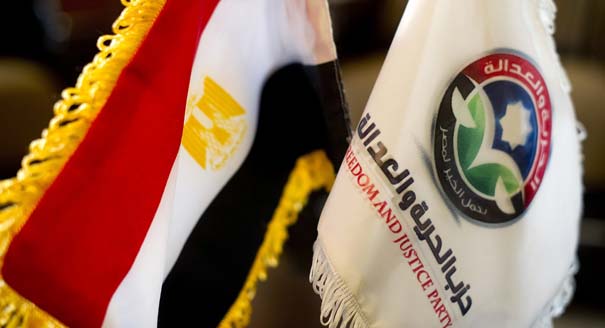
IMGXYZ9209IMGZYXEgypt’s Muslim Brotherhood stands on the brink of an impressive electoral victory. After several months of suggesting it would check its own electoral ambitions, the Brotherhood plunged into politics with unprecedented enthusiasm, focusing all of its energies and impressive organizational heft on the parliamentary vote. Now, with the electoral list of its political arm, the Freedom and Justice Party, likely to gain close to (and maybe even more than) half the seats and perhaps cabinet positions as well, the movement is entering uncharted waters.
Brotherhood leaders often invoke the phrase “participation, not domination.” That old slogan may hold for the time being because the hazy and unsettled rules governing a country in transition make it difficult for any one actor to be in control. And, with the military continuing to exercise a firm grip, the movement will have a strong voice but hardly a dominant one. But the Brotherhood’s ambitions have clearly edged upward. Seeing itself as deeply rooted in its own communities, offering a virtuous alternative to the corrupt system that governed Egyptians for so long and that allowed political, social, and economic power to be deployed for private benefit, Egypt’s Brotherhood now seems to feel called into service by the nation.
Recognizing that its electoral strength may spark a counterreaction from other political forces, the Brotherhood is now calling not for a parliamentary system but for a mixed or semipresidential system. Though currently seeking to avoid full authority, the movement is hardly in a timid mood. It is focusing on the longer term: asserting a justifiably powerful claim to a leading role in the process of writing a new constitution. And the movement’s leaders seem to want a democratic constitution above all else.
Indeed, it is not clear how much the Brotherhood’s past decisions and behavior can continue to guide its future actions. Over the past few years, it has released a blizzard of very detailed policy proposals and platforms. If it is to be successful in government, however, the Brotherhood must start setting its foreign policy, economic, and cultural priorities. While the movement’s appeal has always been strongly cultural, moral, and religious, there are few areas where it sets off fears more quickly than in this realm. As a result, the cultural agenda has been sidelined. But with the ultraconservative Salafis entering the political arena for the first time, the Freedom and Justice Party may be forced to choose between competing with them for the Islamist base and reassuring non-Islamist political forces at home and abroad.

Nonresident Senior Fellow, Middle East Program
Nathan J. Brown, a professor of political science and international affairs at George Washington University, is a distinguished scholar and author of nine books on Arab politics and governance, as well as editor of five books.
Recent Work
Nathan J. Brown
Nathan J. Brown
Carnegie does not take institutional positions on public policy issues; the views represented herein are those of the author(s) and do not necessarily reflect the views of Carnegie, its staff, or its trustees.

Before the next wave of EU enlargement takes place, the union needs to grapple with thorny questions of how power is distributed among its members.


Emil Sondaj Hansen, Ditte Brasso Sørensen

The Horn of Africa countries are among those facing a new security calculus.


Andrew Leber, Lesley Anne Warner

The European far right might fail to steer EU policy in the direction Russia wants, but they will create enough chaos inside Europe to benefit the Kremlin.

Dimitar Bechev

As the U.S. stumbles in its war with Iran, we are likely to see an acceleration of its disengagement from the region.

Michael Young
In Egypt’s dense cities, the disappearance of foliage has health implications and punishes daily commuters.

Angie Omar